Shaken, Stirred, and Misunderstood
Camille Ferrand
6 min read · 19 Jul 2024
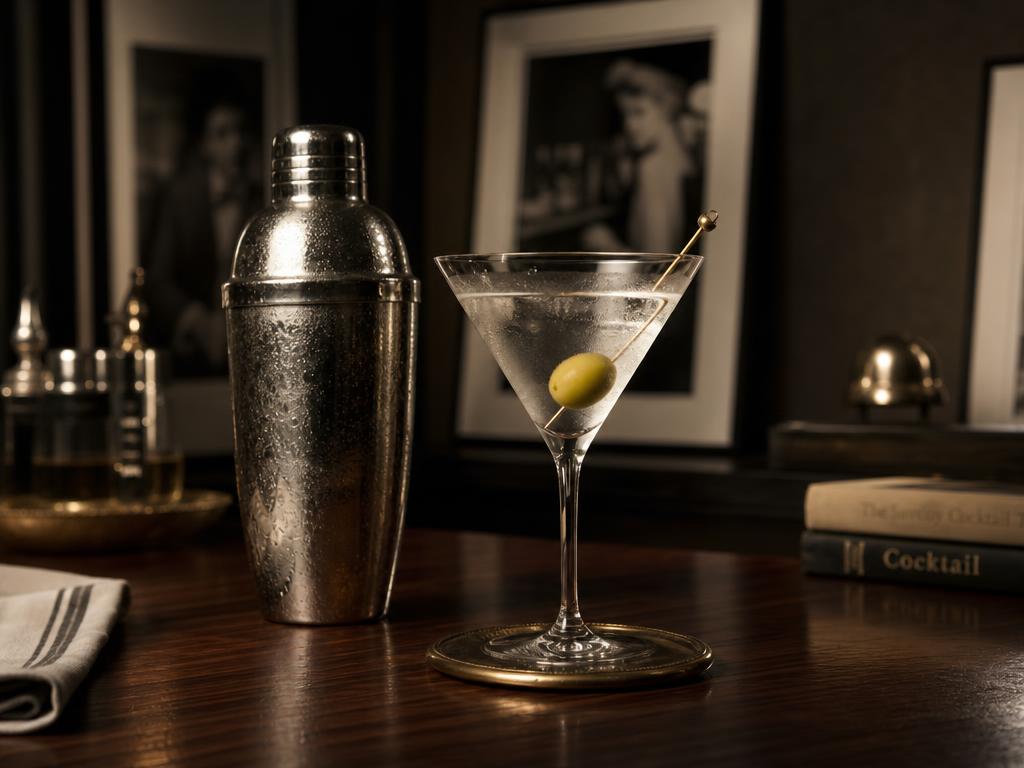
No line in cocktail history has caused more confusion than "shaken, not stirred." When Ian Fleming put those words in James Bond's mouth in 1956, he was not giving bartending advice. He was characterizing a man who was too impatient, too self-assured, and too theatrical to wait for a proper stir. The Vesper — Bond's own invention of gin, vodka, and Kina Lillet — was meant to be shaken, but only because its larger volume and citrus peel benefited from the aeration. A classic dry martini does not.
Another persistent myth: that a dry martini means less vermouth. Originally, "dry" referred to the use of dry (white) vermouth rather than sweet (red) vermouth. Over time, it drifted to mean a drink with very little vermouth at all. Today, if you order a dry martini in a serious bar, the bartender will likely ask what ratio you prefer. The word has become a conversation, not a definition.
Then there is the question of the glass. The V-shaped cocktail glass we call a martini glass was not designed for the martini at all; it became popular during Prohibition because its wide mouth made it easy to drink quickly in case of a raid. The coupe, with its shallower bowl, was the original vessel of choice and is making a quiet comeback among purists.
The most damaging myth is that a martini is fussy or pretentious. It is, in fact, one of the simplest cocktails in the world: spirit, vermouth, ice, garnish. The fussiness is not in the recipe but in the attention. A martini asks you to slow down, to chill the glass, to measure, to taste. That is not pretension. That is respect.